
Introduction
The beaker is a workhorse of the South African laboratory. From minerals and assay labs on the mines to water and environmental testing, SANAS accredited quality control, universities and school science rooms, its cylindrical body and pouring lip make it one of the first pieces of glassware anyone learns to use.
If you are reading up on beakers, you probably want to buy the right one, get clear on the different types, or find a dependable supplier. LabFriend carries a broad selection of laboratory glassware, borosilicate glass, plastic, low form and graduated beakers included, all from recognised manufacturers.
This guide sets out what a beaker is, the tasks it covers, the shapes and materials available, and how to choose one that fits your work.
What is a beaker?
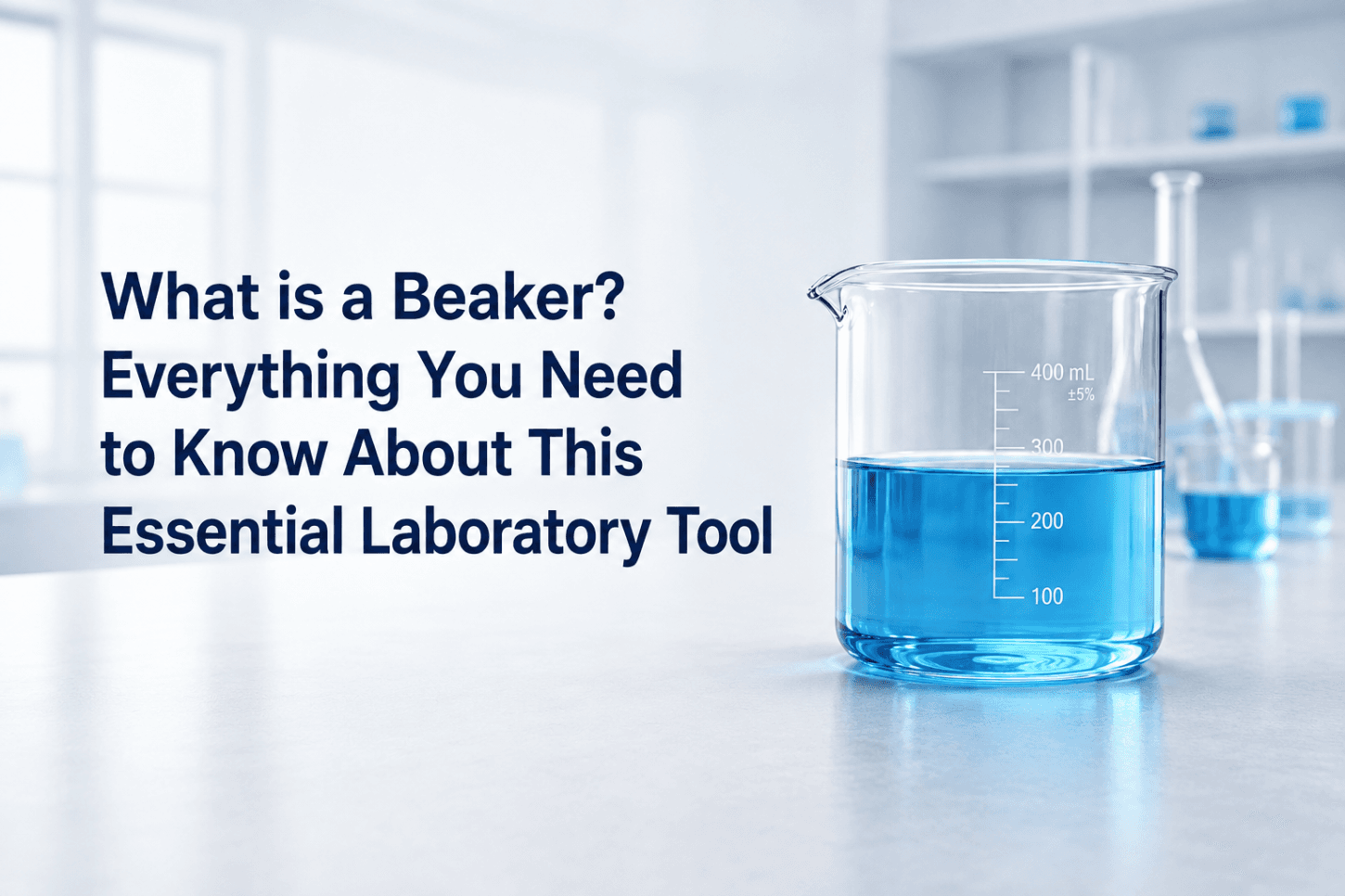
A beaker is a straight-walled cylindrical container for holding, mixing, heating and pouring liquids. Everything about it is practical: a flat base that sits steady, an open top for easy access, rough volume markings, and a lip that guides a clean pour.
Three materials cover most needs, each with its own strengths:
- Borosilicate glass, such as DURAN or Pyrex, heat resistant and chemically inert
- Plastic, typically polypropylene or PMP, light and resistant to breakage
- Quartz or PTFE, kept for speciality work under extreme conditions
Where beakers earn their keep
The open mouth and vertical walls let a beaker turn its hand to almost anything on the bench. You will use one to:
- Blend reagents and make up solutions
- Gauge a volume roughly at a glance
- Heat liquids on a hotplate or Bunsen burner
- Prepare samples for assay, water or effluent testing
- Collect filtrate during filtration
- Pour liquids cleanly between containers
approximate volume
The mark is a guide, not a gauge. Beaker graduations only estimate volume. For an accredited or reportable figure, use a volumetric flask or a measuring cylinder.
Find the right beaker
Answer three quick questions and we will point you to a shape and material, with a link to shop it on LabFriend ZA.
1. What is the primary task?
2. Will it face direct heat?
3. Where will it be used?
Select an option above to see a recommendation.
Types of beaker
Each shape is built for a purpose. Tap a beaker to see what it does best.
BEST FOR
Materials compared
The material fixes how much heat and chemistry a beaker will tolerate. Switch between the three families to weigh the trade-offs.
General guidance only, not manufacturer specifications. Always verify compatibility for your specific product and method.
Beaker brands at LabFriend
We supply beakers from manufacturers that laboratories and educators trust internationally.
DWK DURAN
Borosilicate glass beakers.
- Excellent heat resistance and clarity
- Built for high temperature work
Kartell
Plastic beakers.
- Lightweight and resistant to breakage
- Graduated, with strong chemical resistance
ISOLAB
Glass and plastic options.
- Affordable, accurate and durable
- Available in both material families
How to choose the right beaker
Consider these four points before you order:
- 1Capacity. Sizes run from 25 mL to 2,000 mL, so choose one that suits your working volume.
- 2Material. Choose borosilicate glass for heating and plastic for routine handling.
- 3Graduations. Use the marks as a rough guide, and measure critical volumes in volumetric glassware.
- 4Chemical fit. Confirm the material resists the acids or solvents in your method.
Frequently asked questions
What sets a beaker apart from a flask?
A beaker is a wide cylinder with straight sides and a pouring lip, at its best for mixing, heating and transferring liquids. A flask has a narrow neck over a wider base, which favours swirling and reduces evaporation. Beakers handle general work, while flasks suit titration and accurate volumes. See our conical flask guide for detail.
Are beakers accurate for measuring?
No. The graduations are approximate. For a figure you can report, use a measuring cylinder, a volumetric flask or a pipette.
Can glass beakers be heated directly?
Only borosilicate glass such as DURAN or Pyrex, which withstands thermal shock. Do not apply direct heat to soda-lime glass or plastic beakers, as they can crack, melt or release fumes.
What beaker sizes are available?
Beakers at LabFriend range from about 25 mL to 2,000 mL, with larger sizes on request. Match the size to your volume and your method.
Can plastic beakers be reused?
Yes. Plastic beakers in polypropylene or PMP are durable and reusable once cleaned, provided you keep them away from direct heat and strong solvents.
Which beaker brands are popular in South Africa?
Widely used names include DWK DURAN, Pyrex, Kartell, ISOLAB and LLG Labware, all stocked by LabFriend and delivered across the country.
How should I clean laboratory beakers?
Rinse with distilled water immediately after use, then wash with a mild detergent and a soft brush. For stubborn residue, use a lab grade cleaner, and avoid abrasive scourers that scratch and weaken the glass.
Do you offer bulk pricing?
Yes. LabFriend provides volume pricing for schools, universities, research and industry. Contact our team for a quote.
Do beakers come with lids?
Not by default, but watch glasses or beaker covers are available separately to reduce contamination and evaporation.
How does delivery work in South Africa?
LabFriend delivers across South Africa, with orders dispatched promptly and timing dependent on your location. See our delivery page for the options.
Final thoughts
The beaker looks basic, yet it underpins day-to-day work across South African labs, from blending and heating to collecting and pouring. Whether you need low form, tall form, glass or plastic, LabFriend supplies quality beakers with delivery nationwide.
Stock your lab
Browse the full beaker range, from low form and tall form to glass and plastic.
.png&w=3840&q=75)